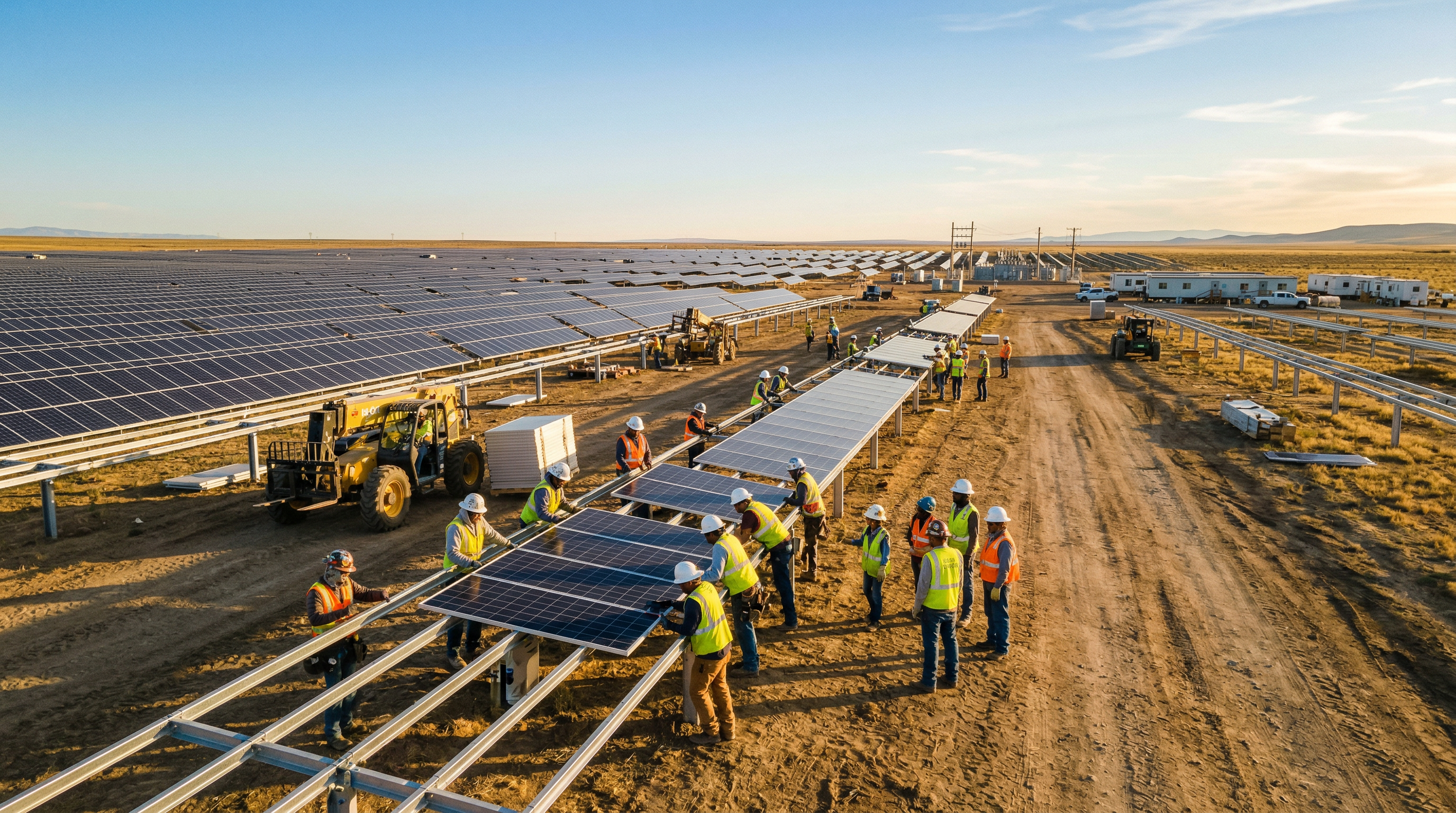
There is no sector of the U.S. construction market growing faster right now than utility-scale solar. The numbers for 2026 are staggering: developers plan to add 43.4 gigawatts of new solar capacity to the national grid this year alone, a 60% increase over the 27.2 GW installed in 2025, which was itself a record. And behind every one of those gigawatts is a construction project -- often a very large one -- in a rural community that may never have seen anything like it before.
I work with contractors and project owners across multiple construction verticals, and the solar buildout has become one of the most significant construction risk conversations I'm having. The scale is enormous, the timelines are aggressive, and the insurance landscape is more complex than most participants realize.
The Scale of What's Being Built
To put the current moment in context: the EIA's February 2026 Electric Power Monthly report projects 86 GW of total new utility-scale generating capacity coming online this year -- the largest single-year capacity addition in over two decades. Solar and battery storage together account for 79% of that total. Renewables and storage are projected to represent 93% of all new utility-scale capacity in 2026, while natural gas additions amount to just 6.3 GW.
Texas is the epicenter, hosting roughly 40% of the nation's planned solar construction -- about 17.4 GW. Arizona and California each account for approximately 6% of the national total. But the buildout extends well beyond those traditional solar markets. Michigan, Illinois, Indiana, and other Midwestern states are seeing significant project activity as developers push into new geographies to meet demand from data centers, manufacturing facilities, and grid operators.
The investment figures are equally striking. Industrial Info Resources tracked more than $8.8 billion in solar projects with a medium-to-high likelihood of starting construction in just the first quarter of 2026. More than 80% of that investment is in greenfield projects. Looking further out, Cleanview's project tracker counts 4,143 planned solar projects in U.S. development as of April 2026, with a combined planned capacity of nearly 693 GW.
Several of these individual projects are massive. Intersect Power is preparing to break ground on the Darden Clean Energy Project in Fresno, California -- a 1.15 GW solar facility paired with a 1.15 GW battery storage system and a 15-mile transmission line. In Michigan, Hecate Energy is expanding its Sunfish Solar Plant from 360 MW to 860 MW. These are not small construction jobs.
What's Driving the Urgency
Beyond the secular growth in electricity demand -- driven heavily by data center buildout, AI infrastructure, and reshoring manufacturing -- there is a specific regulatory clock creating urgency. Section 48E investment tax credits for solar require construction to begin by July 4, 2026, with projects placed in service by December 31, 2027, to qualify for the current federal incentive structure. That deadline is compressing development timelines and putting enormous pressure on EPC contractors to mobilize quickly.
This time pressure is amplifying an existing workforce challenge. The U.S. solar industry employed 280,119 workers in 2024, and the demand for skilled electricians and construction tradespeople continues to outstrip supply. The country is currently short approximately 80,000 electricians, and that gap is projected to widen to as many as 224,000 unfilled roles by 2030. For rural communities, this translates to a genuine economic opportunity -- solar construction firms are actively hiring and training local workers through apprenticeship programs that provide career pathways without requiring traditional college education.
The Insurance Complexity Most Contractors Underestimate
Here is where the conversation gets particularly relevant to my work. Solar construction presents a risk profile that doesn't fit neatly into standard construction insurance frameworks, and the gaps can be costly.
Builders risk is the foundation, but it requires specialty structuring. A utility-scale solar farm is not a building -- it's thousands of ground-mounted panels spread across hundreds of acres, connected by miles of electrical infrastructure, often co-located with battery energy storage systems (BESS) that carry their own distinct fire and thermal runaway risks. Standard builders risk forms written for vertical construction need significant modification to properly cover a solar project. Travelers Insurance has highlighted that material shortages can delay resupply and slow timelines for contractors who've experienced a loss, and those disrupted timelines can then amplify other exposures in ways that a standard policy may not contemplate.
Hail is the single largest property loss driver -- and it's not close. A GCube Insurance study found that while hail damage accounted for just 1.4% of insurance claims filed for U.S. solar projects, those claims represented 54% of total solar losses. Global insurer Axis reported that hail-related claims between 2019 and 2025 affected 1.3 million solar modules and 2.7 GW of capacity, totaling $342 million in gross claims. One single project suffered a $70 million loss from a hail event. For projects under construction in Texas, the Gulf Coast, and the Great Plains -- which is where much of this buildout is concentrated -- hail risk isn't a hypothetical. It's a near-certainty over a project's lifetime, and the construction phase is particularly vulnerable because hail-stow technology may not be fully operational.
Subcontractor oversight is under increasing scrutiny. NARDAC's 2026 insurance market outlook for renewable energy specifically flagged increased underwriter scrutiny on subcontractor qualification and oversight in solar and BESS construction. Site safety plans, traffic management protocols, and the interface between renewable infrastructure and adjacent land uses are all areas where carriers are asking harder questions. For general contractors running large solar projects with multiple subcontractor tiers, the casualty and excess liability implications are significant.
Delay-in-startup exposure is material. Given the July 2026 construction-start deadline for tax credits and the December 2027 placed-in-service deadline, a construction delay caused by an insured loss doesn't just cost repair money -- it can cost the project its entire federal tax credit qualification. Delay-in-startup (DSU) and business interruption coverage must be structured to address this contingent financial exposure, not just the direct physical loss.
The Bottom Line
Solar farm construction is one of the most dynamic and economically significant segments of the U.S. construction market right now, and it's going to remain so for years. The combination of aggressive federal incentive timelines, soaring electricity demand, and massive capital deployment is creating a buildout unlike anything the industry has seen.
But the insurance and risk management side of these projects requires specialized attention. The exposures -- from hail and severe weather to subcontractor liability to tax credit contingency -- don't fit standard construction insurance templates. Contractors, developers, and investors who treat solar risk like any other construction project are likely carrying gaps they don't know about until a loss event forces the discovery.
Building or Investing in Solar?
I work with solar EPC contractors, developers, and project investors to structure insurance programs that address the specific risk profile of utility-scale renewable energy construction. If you have a project in development or under construction, I'd welcome the chance to review your current coverage.
Get in Touch