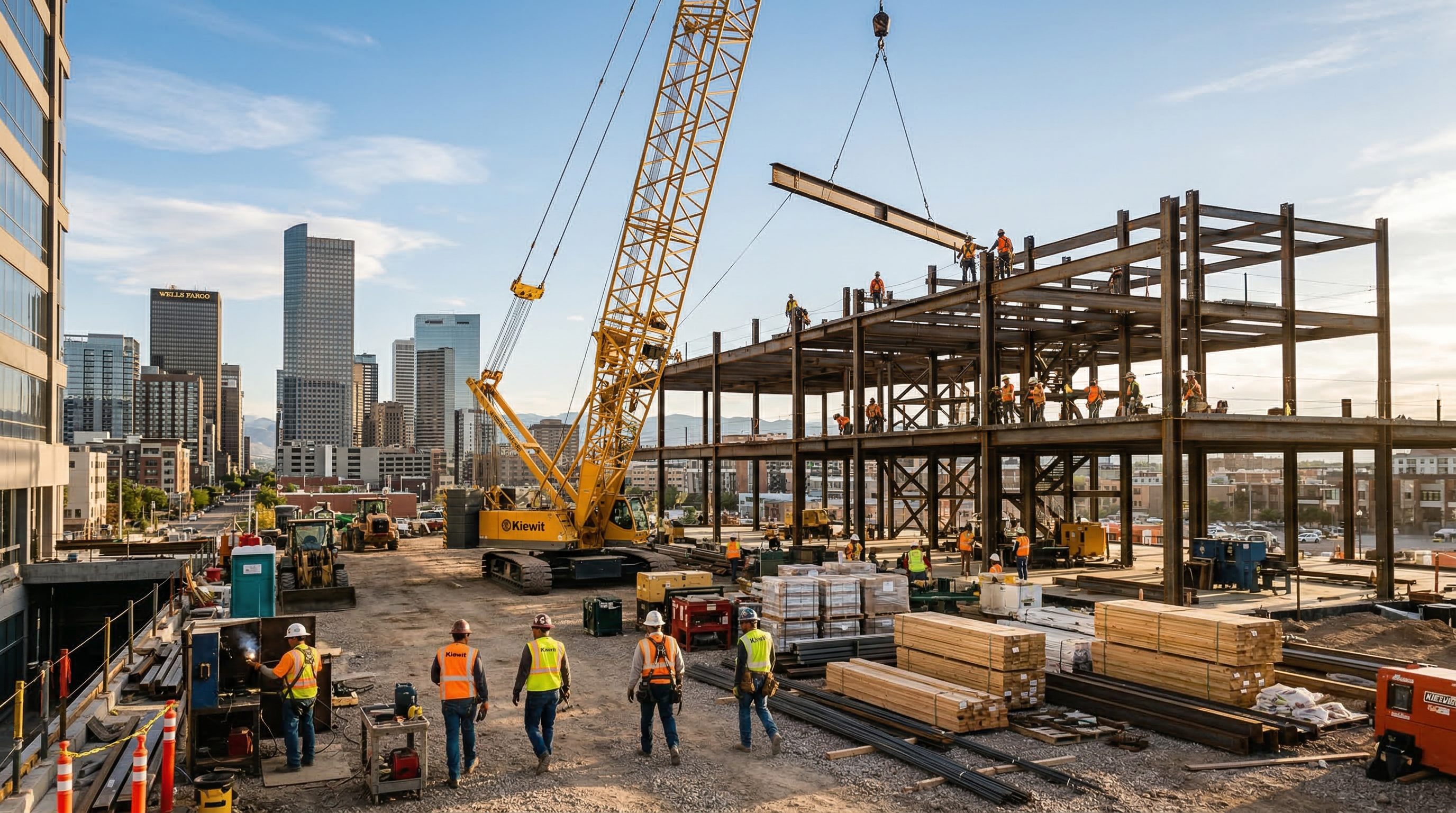
If you are breaking ground on a project in 2026, the cost picture is more nuanced than at any point in the last five years. Construction input prices have climbed more than 43 percent since early 2020, and while the pace of escalation has slowed compared to the pandemic-era spikes, several forces are keeping sustained upward pressure on budgets. I am seeing it across every sector I work in — real estate, construction, and manufacturing — and the developers who are managing it best are the ones paying attention to the details.
Where the Cost Pressure Is Coming From
The story in 2026 is not a single headline number. It is a patchwork of cost pressures that vary dramatically by material, trade, and region.
On the materials side, tariffs are the dominant force right now. Steel bars, plates, and structural shapes rose 12.1 percent in 2025, and hot-rolled coil and cold-rolled coil prices are up nearly 45 percent since mid-2025 alone. Aluminum mill shapes increased by more than 30 percent last year. Copper is up roughly 36 percent year over year, which is putting significant pressure on electrical and mechanical trades. Meanwhile, large steel fabricators are booked out through the latter part of 2026, creating a capacity constraint that is becoming just as impactful as the price increases themselves.
Lumber tells a different story. Softwood lumber prices remain below last year's levels, and futures are trading near $600 per thousand board feet — roughly flat. Ready-mix concrete has also softened in some markets. So the idea that "everything is more expensive" is not quite right. The volatility is in metals, and metals are in nearly every commercial project.
National construction costs increased 2.8 percent year over year in January 2026. But that average masks sharp regional variation — some markets saw outright declines while others, like Chicago, are pushing near double-digit increases driven by labor.
The Labor Equation
Materials get the headlines, but labor is the structural challenge. The Associated Builders and Contractors estimates the industry needs to attract 349,000 net new workers in 2026 just to keep pace with demand. That number rises to 456,000 in 2027 as spending growth is expected to resume. The majority of this year's worker demand is driven by retirements, not new project starts — meaning the gap is baked into the industry's demographics regardless of what the market does.
At the same time, 92 percent of construction firms currently hiring report difficulty finding qualified workers. Immigration enforcement is compounding the challenge in a sector that has historically relied on immigrant labor more than most. And the competition for skilled tradespeople is intensifying because data center and AI infrastructure projects — which tend to be more profitable for contractors — are pulling crews away from residential, manufacturing, and standard commercial work.
All of this translates to wage pressure. Labor costs for multifamily construction alone are up more than 20 percent over the past five years. For specialty trades like electrical and mechanical, the numbers are even higher in certain metros.
A Silver Lining: Contractors Are Getting Competitive
Here is something I am watching closely that many developers have not yet picked up on. With the development pipeline clearly resetting — particularly in multifamily and industrial — contractors in several markets are beginning to reach out to developers to secure upcoming work and keep their crews busy. This is a meaningful shift in leverage. After years of contractors being able to name their price and timeline, owners are regaining some negotiating power on project pricing, scheduling, and contract terms.
JLL reports that material prices in 2025 averaged approximately 4.2 percent above 2024 levels, but that overall baseline total project cost escalation is running four to six percent — with tariff-driven scenarios pushing seven to ten percent. For developers who are strategic about timing and procurement, there is a window to lock in better terms before the next spending cycle ramps up.
What This Means for Your Insurance Program
Rising construction costs do not just affect your project budget — they directly impact your insurance program, and this is where I see the most common blind spots.
When project valuations increase, your builders risk limits need to keep pace. I work with developers who set their coverage at the original budget estimate and never adjust it as change orders and cost escalation push the actual value higher. If a loss occurs on a project that is now worth 15 to 20 percent more than the insured value, you are facing a significant coverage gap.
The same logic applies to completed values. If you are a property owner with buildings constructed in the last few years, replacement cost estimates need to reflect today's material and labor environment — not what it cost to build originally. Carriers are paying close attention to stated values, and underreporting puts you at risk of coinsurance penalties or inadequate claim settlements.
- Review builders risk limits at least quarterly on active projects, not just at policy inception.
- Update replacement cost appraisals on completed properties to reflect current construction costs — a building that cost $50 million in 2020 may cost $70 million or more to replace today.
- Reassess business interruption coverage to account for longer rebuild timelines driven by material lead times and labor availability.
- Evaluate subcontractor default insurance, especially as financial pressure on smaller subcontractors increases in a volatile cost environment.
The Bottom Line
Construction costs in 2026 are not spiraling out of control, but they are not coming down either. The pressures are structural — tariffs, labor demographics, and supply chain reconfiguration — rather than cyclical, which means hoping for relief next quarter is not a strategy. The developers and owners who are winning right now are the ones being precise about where costs are actually increasing, taking advantage of the shift in contractor leverage, and making sure their insurance programs reflect the real cost of what they are building and owning.
If it has been more than six months since you reviewed your project valuations or builders risk limits, that is the first conversation worth having.
Need to Reassess Your Construction Program?
I can help you evaluate whether your builders risk limits, replacement cost valuations, and project insurance structure are keeping pace with today's cost environment.
Get in Touch